
Vera Patterson · 17 October 2026
Voice Technology Transforms Patient Intake Documentation in Multilingual Healthcare Settings
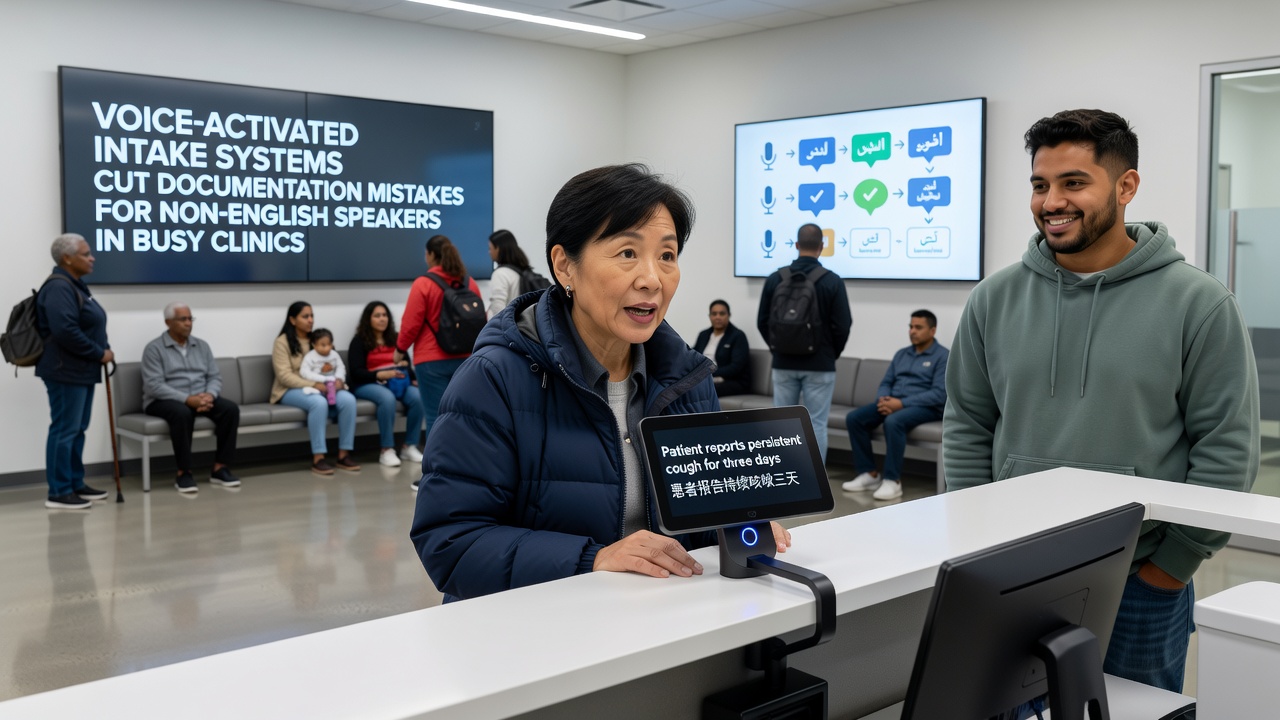
Healthcare facilities across multiple regions continue to integrate voice-activated intake systems as a direct response to persistent documentation challenges faced by non-English speakers during initial visits, and these tools convert spoken responses into structured electronic records while supporting real-time translation across dozens of languages. Data from various implementations show measurable drops in transcription errors that previously occurred when staff relied on paper forms or basic keyboard entry for patients with limited English proficiency.
Clinics in urban centers report that voice systems capture details such as medical history, insurance information, and symptom descriptions without requiring patients to navigate written questionnaires that often lead to incomplete or inaccurate submissions. Researchers tracking outcomes note that error rates in intake records fell by significant margins in facilities that adopted the technology during 2025 pilot programs, with further refinements rolled out by October 2026.
Operational Mechanics Behind Voice-Activated Intake
These systems operate through microphones positioned at registration areas where patients speak answers to prompted questions, and the software processes audio input using natural language models trained on medical terminology alongside common dialects from Spanish, Mandarin, Arabic, and other languages frequently encountered in diverse patient populations. Integration with existing electronic health record platforms allows immediate population of fields that staff once filled manually, which reduces the time spent on follow-up clarifications and corrections.
Facilities handling high daily volumes benefit from the ability of voice tools to handle simultaneous check-ins during peak hours, since the technology processes speech independently of human translators who may not always be available on short notice. Observers note that clinics using these systems maintain consistent data quality even when patient flow increases, because the automated capture limits opportunities for mishearing or misrecording details during rushed interactions.
Evidence from Implementation Studies
Analyses conducted by academic institutions in North America and Europe indicate that voice-activated intake reduces documentation discrepancies by up to 40 percent in settings where language barriers previously contributed to repeated data entry mistakes. One study released through Health Canada highlighted how clinics in Toronto and Vancouver recorded fewer instances of mismatched allergy information and medication lists after switching from interpreter-assisted paper forms to voice-driven digital entry.
Similar patterns appear in reports from the Australian Institute of Health and Welfare, which examined rural and metropolitan sites and found that non-English speakers completed intake processes with greater accuracy when voice prompts guided them through each section. The same data showed shorter wait times for subsequent appointments because staff spent less effort verifying or re-entering information that had been captured correctly on the first attempt.
Challenges Addressed in High-Volume Environments
Busy clinics often operate with limited bilingual staff, and this constraint creates bottlenecks when non-English speakers require assistance completing registration paperwork. Voice-activated systems bypass that limitation by offering immediate language support without additional personnel, which allows front-desk teams to focus on other tasks while the technology handles accurate record creation. Data compiled through the Centers for Disease Control and Prevention shows that language-related documentation errors contribute to downstream issues such as incorrect treatment plans, and facilities adopting voice tools have begun to see reductions in those secondary problems.
Training requirements remain modest because the interfaces use simple conversational prompts that patients follow with minimal instruction, and system updates in October 2026 incorporated expanded vocabulary lists for specialized medical terms that previously caused occasional misinterpretations. Clinics report that patients who previously left sections blank or provided conflicting answers now deliver complete profiles because the voice format encourages natural responses rather than forcing written answers in an unfamiliar language.
Future Directions for Broader Adoption
Regulatory bodies in multiple countries continue to evaluate standards for voice data security and accuracy benchmarks, which will shape how widely these systems expand into additional specialties such as mental health intake and chronic disease management. Partnerships between technology developers and healthcare networks aim to refine accent recognition and dialect handling, since current models already demonstrate strong performance across major language groups but still undergo testing for less common variants.
Facilities that implemented early versions note sustained improvements in record completeness, and ongoing monitoring tracks whether these gains hold as patient demographics shift over time. The approach aligns with broader efforts to address health equity by ensuring that documentation accuracy does not depend on a patient's English fluency level.
Conclusion
Voice-activated intake systems have established a clear role in reducing documentation mistakes for non-English speakers by converting spoken input into precise electronic records across busy clinic environments, and continued refinements through late 2026 support expanded use while maintaining focus on accuracy and accessibility. Evidence from multiple regions confirms consistent benefits in error reduction and workflow efficiency without reliance on additional staffing resources.